Computer-Based Training (CBT) India
What is Computer-Based Training (CBT)?
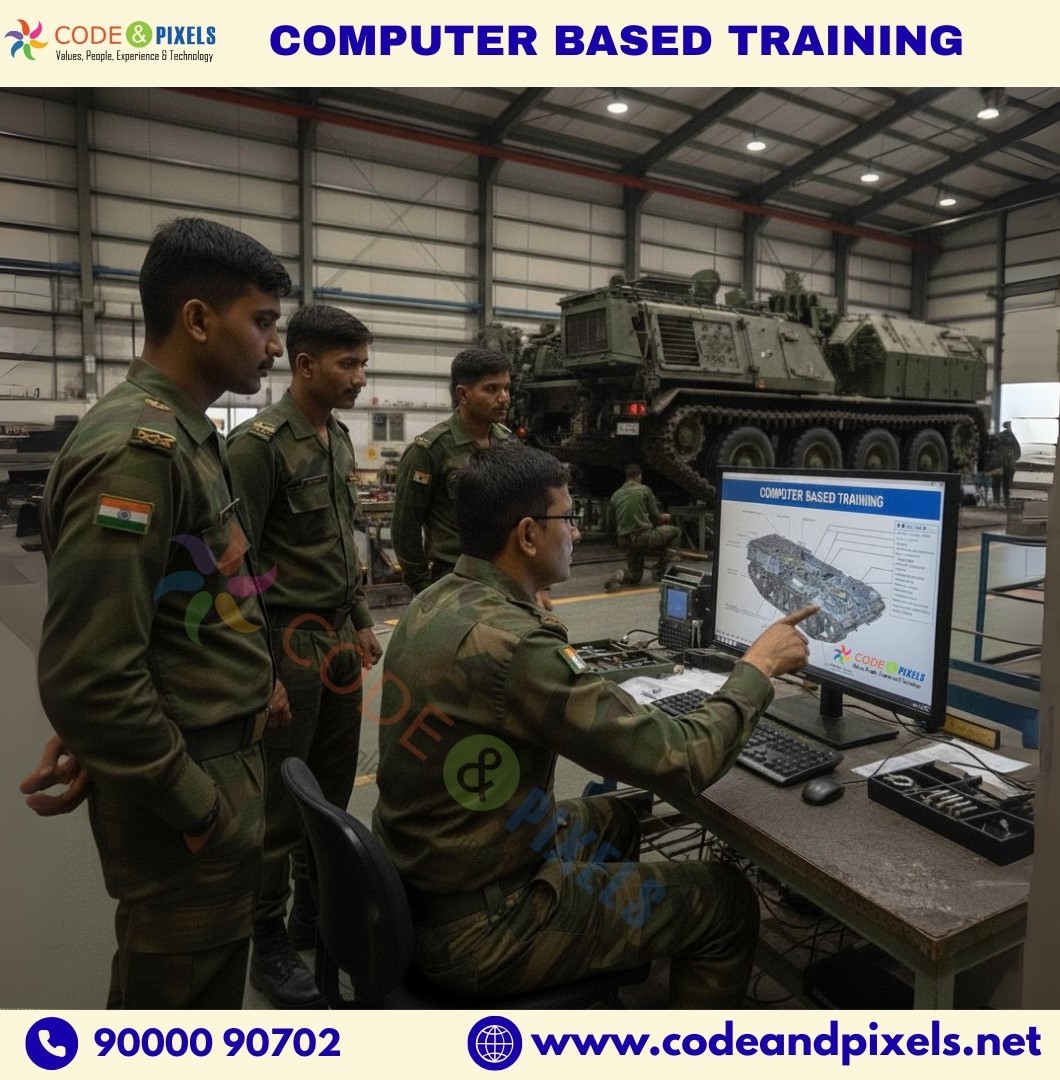
As the name indicates, it's a computer-based training. It means using a computer, giving training to personnel on equipment, software, systems, or machinery, etc.
Computer-Based Training (CBT) refers to any type of educational or instructional program delivered via a computer. It often utilises multimedia elements such as text, graphics, audio, and video to facilitate learning. CBT can be self-paced, allowing learners to progress at their own speed, or it may be structured with specific timelines and assessments.
Technical Specifications of any standard CBT / SCOPE of CBT
What is expected from Computer-Based Training CBT?
The purpose of CBT is to give as much knowledge as possible before the user touches the actual system. Theoretically user must have ample knowledge before handling or hands-on, i.e. Introduction about the system, Technical specification, Deployment, Assembly, disassembly, Operation, Maintenance and troubleshooting.
When the user attains excellent knowledge about the system theoretically, use can grasp the practicality of the system very easily. CBT gives a strong foundation to the user.
CBT will be used in training the theory to personnel or even as a self-learning tool. This is called blended learning.
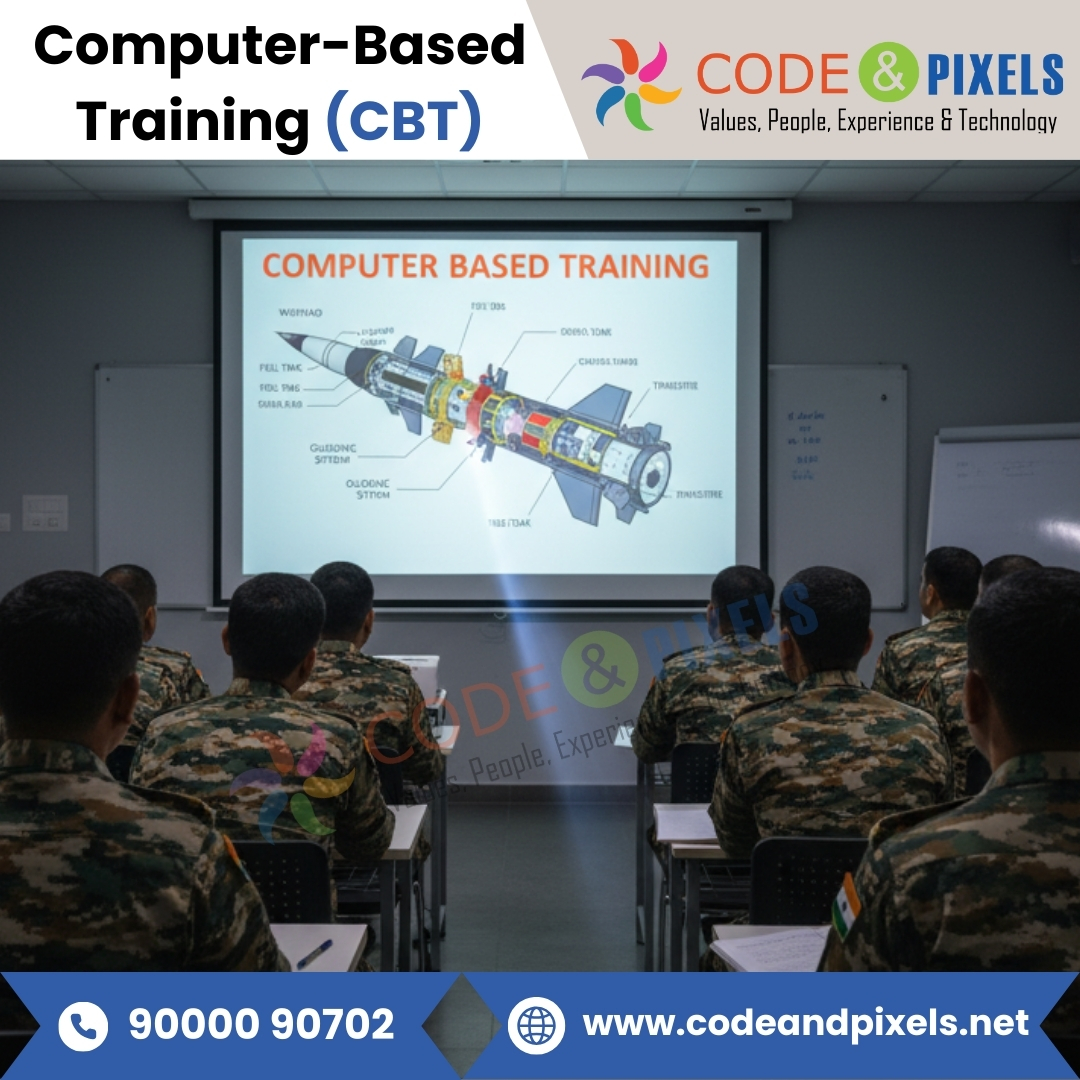
The developed Computer-Based Training (CBT) will allow technical personnel to comprehend the description, operation, working principles, parts and parts locations, warnings and cautions, as well as maintenance procedures for systems, all from the classroom, eliminating the need for on-site visits to the actual machinery, assembly area.
The CBT will be developed as a single package consisting of 3 main components.
Description & Operation (D&O) CBT
Maintenance (MNT) CBT
Symptoms Fault Correlation (SFC)
The Description & Operation (D&O) section of the CBT will include information on systems, working principles, the location of Parts/LRUs, electrical power supply and signal flow, indications, and warnings, providing a comprehensive understanding of the systems.
This section will also feature question banks for quizzes (organised by system/module) to help trainees review and assess their learning.
The Maintenance section of the CBT will be developed based on the procedures outlined in (1) the System Maintenance Manual - Scheduled, (2) the Maintenance Manual - Unscheduled, (3) the Engine Maintenance Manual, (4) Calendar-Based Inspection/Servicing, (5) Hourly-Based Inspection/Servicing, (6) Out-of-Phase Inspection/Servicing, and (7) relevant portions of Vendor Manuals.
Symptoms Fault Correlation (SFC) : This will serve as a training aid for providing theoretical instruction to technical personnel on troubleshooting procedures for systems.
Having said this, there is no rule that every CBT must have these sections. Based on the nature of the system, modules and submodules may vary.
General Characteristics of Computer-Based Tutor/Training
The CBT will be user-friendly, browser-independent, and compatible with the latest and future versions of all current browsers for the relevant operating systems.
CBT will include text, labelled images and line diagrams, video clips, 2D and 3D animations, 360-degree views of LRUs/systems, cross-sectional views, exploded views, and high-quality computer-generated audio as necessary. This will ensure that the training package is both self-explanatory and interactive.
High-quality voiceovers in both male and female voices (in English) will be provided for the text, videos, and 2D and 3D animations.
Text content, along with synchronised 2D and 3D animations, video clips, and images, will be presented side by side in the CBT slides for easy reference.
Graphic User Interface Features of E-Content Module / CBT/Computer-Based Training module/ Tutor
| Slider | Slider Option should be user-friendly to the user, where the user can drag the slider forward/backwards of the screen animation & audio. |
| Tree Menu structure at Index | The Index should be enabled to extend to more than one/ further level for subtopics in a user-friendly manner |
| Audio Volume | The Audio Volume button controls the level of volume for the user to increase or decrease according to the user's choice |
| Navigation Buttons | Navigation buttons like Next, Previous and Pause, Screen Number/Total Number of Screens should be available in a user-friendly manner. |
| Handouts | PDFs or other documents related to the topic should be downloadable. |
| Glossary | Glossary terms related to the topic is be seen. |
Delivery of Computer-Based Training CBT India:
CBT is usually delivered on DVDs or a USB drive. CBT has password protection to access the contents.
Till 2016, CBTs used to be delivered in Exe format. Windows can play EXE very well. Due to the advancement of technology and the availability of mobile devices, CBTs were also needed to play on Mobile devices. EXE files can not be played on mobile; hence, the HTML5 format was introduced.
This has become web-based Tutor or E-learning, e-content development, etc.
Corporates and other industries call this e-learning, but the Defence calls this Computer-Based Tutor only.
The reason may be, mobile devices aren’t allowed to be used, hence no mobile learning is expected. It’s all Computers.
Still, in a few places, Training and training material is used through Mobiles, Tablets etc, hence, it's always advisable to develop CBT in HTML5 only.
HTML5 makes sure that the course fits any type and size of screen, device. It is called responsive courses.
Responsive design is a course development strategy that enables a CBT to adapt to various screen sizes and devices, providing a consistent and optimal user experience across all platforms.
This approach utilises flexible grids, layouts, images, and CSS media queries to modify the CBT/course appearance and functionality based on the user's device, whether it’s a desktop, tablet, or smartphone.
What are the Applications of CBT?
Computer-Based Training (CBT) has emerged as a unique solution for training across various industries that require skill enhancement for employees, stakeholders, clients, or even end users. In India, healthcare, information technology, manufacturing, aviation, and especially defense industries are embracing CBT due to its organized, interactive, and economical learning offerings.
Code and Pixels has developed enhanced credential-based CBT platforms that engage users with advanced features to streamline training. Learners are able to track their progress, set bookmarks for easy navigation, seamlessly resume lessons, and interact with 3D objects for deeply immersive training. Our CBT solutions are created using state-of-the-art technology, ensuring uninterrupted and dependable functionality on all operating systems.
India’s defense sector has incorporated CBT technologies so thoroughly that the need is explicitly mentioned in RFPs, TSPs, and SOTRs. The Army, Navy, and Air Force have highly demanding specialized CBT application requirements due to intricate and rigorous training benchmarks. In response to this, Code and Pixels has developed advanced defense-compliant CBT systems that follow strict military guidelines, boosting operational readiness while reducing the need for conventional, live-training led instruction.
Key features of Computer-Based Training CBT include:
Interactivity: Many CBT programs incorporate interactive elements, such as quizzes and simulations, to engage learners actively.
Flexibility: Learners can access materials anytime and anywhere, making it easier to fit training into busy schedules.
Consistency: CBT ensures uniformity in training delivery, meaning all learners receive the same quality of instruction.
Tracking and Assessment: Many CBT solutions include tracking systems that monitor progress and assess comprehension through tests and quizzes.
CBT is commonly used in various settings, including corporate training, educational institutions, and skills development programs, making it an effective tool for both individual and organisational learning.
Overall, CBT provides a flexible, self-directed, and often more accessible alternative to traditional training methods, making it suitable for a wide range of learning environments and audiences.
What is Computer-Based Training ?
The organised approach to teaching or learning skills, knowledge, abilities, and even attitudes for a specific purpose or activity is often goal-oriented. Its primary aim is to enhance an individual's capability, capacity, productivity, and performance.
If this training is given using a Computer, it's called Computer-Based Training.
After mobile resolution and the availability of the internet, the term e-learning has emerged.
What is E-learning ?
E-learning means learning something using an electronic device. The word E-content means any content in the form of electronic. It means any digital content.
It is also called Multimedia Tutor. Multimedia means, combination of various media like text, images, graphics, animations, Voice, etc.
Using all these media, if something is delivered for training, that is called Multimedia Training, Computer-Based Training, E-learning or e-content development.
All words can be used interchangeably.
a computer-based tutor can serve as a supplement to traditional teaching methods or stand alone as the primary mode of instruction. It is often used in various fields, including language learning, technical skills training, and professional development.
Overall, a computer-based tutor aims to create an effective and engaging learning environment that adapts to the learner's needs.